Publicly Owned. Publicly Funded.
Open to Everyone.
Chehalem Park and Recreation District parks belong to the entire community.
They should welcome families, hikers, cyclists, equestrians, runners, children, seniors, and everyone who values time outdoors.
No single user group should be allowed to claim a public park for itself—or permanently exclude other responsible forms of recreation.
We support shared parks, thoughtful planning, and recreation opportunities for everyone.
What’s happening?
A petition campaign is seeking a new “Rural Heritage Park” designation for large CPRD properties, including Bob and Crystal Rilee Park.
Supporters are promoting the measure as protection against hypothetical threats such as data centers and industrial development. But no CPRD board member or staff member has proposed putting a data center in a park.
The dispute began over something much simpler: whether bicycles should be allowed at Rilee Park.
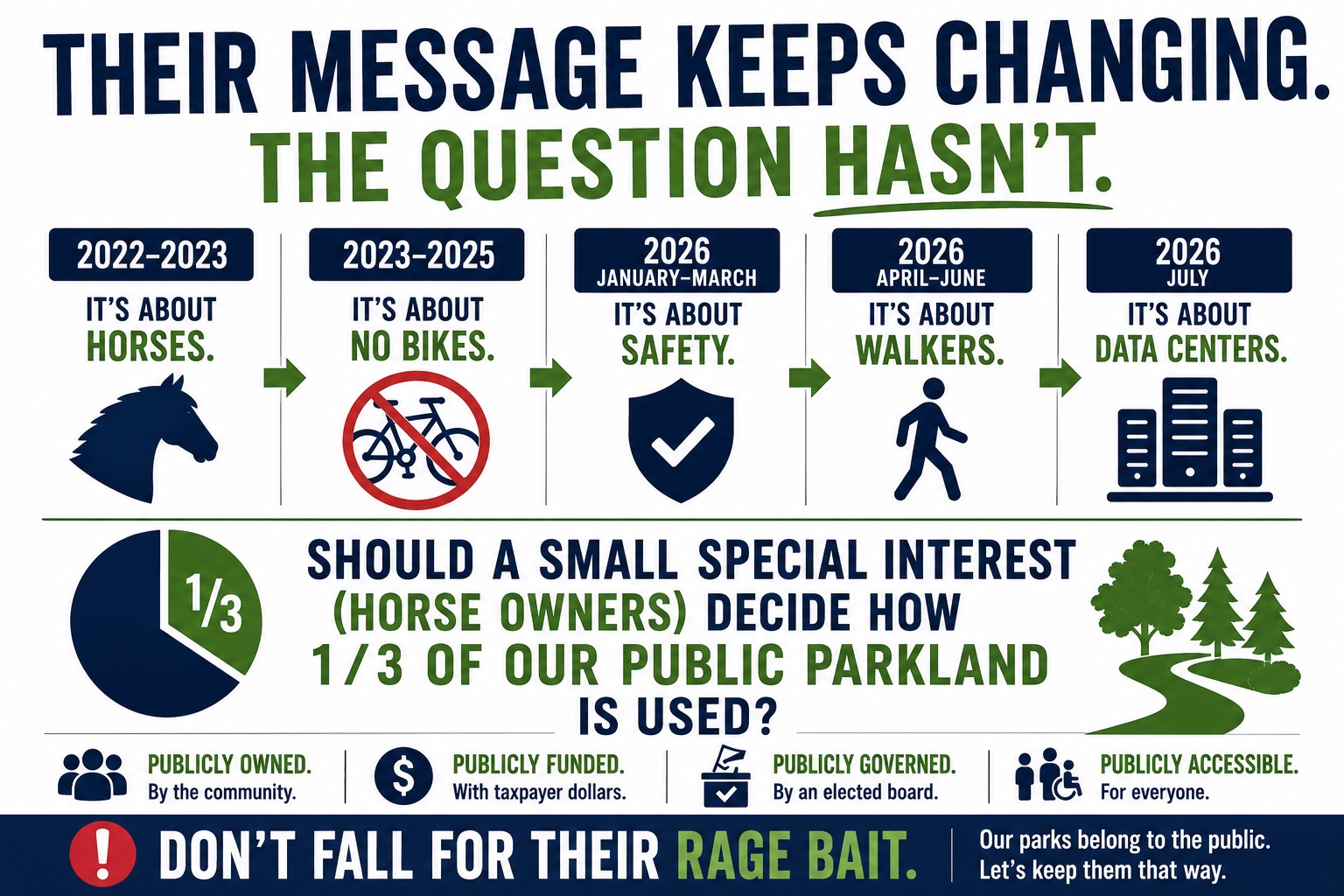
Over the past several years, the public explanation has changed—from horses, to bicycles, to safety, to walkers, and now to data centers. The underlying proposal has not: restricting how publicly owned parkland can be used and preventing the elected CPRD board from managing it for the broader community.
We can protect our parks from inappropriate development without banning families and children from riding bicycles.
Our parks are for everyone
Rilee Park is publicly owned, publicly funded, and governed by an elected public board.
The community pays to acquire, maintain, insure, and manage CPRD properties. Decisions about those properties should therefore be made openly, based on the needs of the entire district—not permanently dictated by a narrow private interest.
Public parks can support many compatible activities:
* Walking and hiking
* Bicycling
* Horseback riding
* Running
* Nature observation
* Youth and family recreation
* Environmental education
* Community programs
Sharing a park does not mean abandoning conservation, safety, or responsible stewardship. It means designing trails and facilities thoughtfully so different members of the public can enjoy the land they collectively support.
The real question
The question is not whether we should protect public parks from data centers. We should—and CPRD can prohibit industrial uses without excluding ordinary recreation.
The real question is:
Should a small special interest decide how a major share of our publicly funded parkland is used?
We believe decisions about public parks should remain with the public and its elected representatives.
One side is working to keep the door open.
The other is asking voters to permanently close it to many of the people who paid for the park.
Crystal Rilee envisioned a place for the community
The history of Rilee Park is more complicated than recent campaign materials suggest.
The property began as part of a vision for education, history, recreation, and public enjoyment. Records from the property’s earlier years do not support the claim that it was intended to become a permanently bicycle-free preserve or an exclusive equestrian park.
Once CPRD acquired the property, it became public land—owned by the district, governed by an elected board, and supported by taxpayers.
Learn more about the history at RileePark.org
Protect the park. Share the park.
We reject the false choice between protecting natural spaces and allowing the public to enjoy them.
We can preserve open space while creating safe opportunities for hikers, equestrians, cyclists, families, and other visitors. That is what responsible public park management looks like.
Keep our parks open. Don’t let a few people limit them for everyone else.
Stay connected
Follow us for updates, historical information, public meeting announcements, and simple ways to support parks that remain open to the whole community.